Celebrating 25 Years of Regional NRM
The 9th National Natural Resource Management Knowledge Conference, held September 8–12 in Cairns, marked a significant milestone, 25 years since Australia adopted the regional natural&...
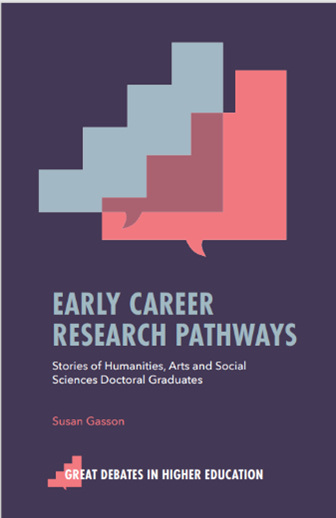
Launching in November 2025, Early Career Research Pathways shares advice on managing seven tensions faced by new doctoral graduates. The book, edited by Cairns Institute Adjunct Susan Gasson, is based on a narrative inquiry conducted as part of her award-winning doctoral thesis work.
The seven tensions depicted below were revealed through a narrative inquiry involving eight early career researchers located in Australia, Asia and the Americas. Written for early career researchers, policy makers and employers chapters of the book explore the tensions and reveal strategies to assist in their management or navigation.
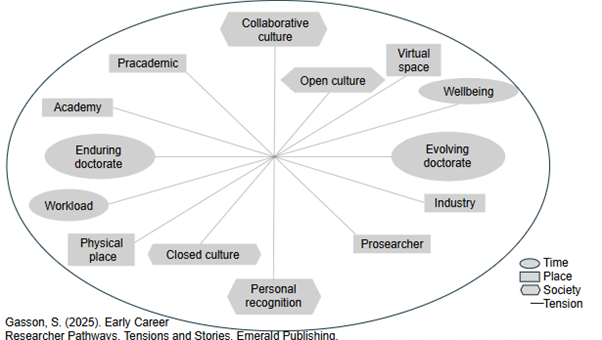
The book introduces a novel concept the prosearcher. In contrast to the pracademic – defined as a practitioner who seeks to move from a professional career into academia, the prosearcher uses their doctoral studies and engagement in research to progress their professional career. The challenges for both pracademics and prosearchers in merging identities and managing expectations of existing networks and employers feature in the chapter exploring this tension.
In discussing tensions between open and closed research cultures and collaborative and personal recognition, the authors of those chapters explore the people and societies involved. Issues discussed in the chapter on open and closed cultures include the credibility of open-access publishing and the costs and benefits of Article Processing Charges (APCs). The chapter on Collaborative Culture and Personal Recognition considers ways early career researchers can ensure they receive recognition for their work when engaging in collaborative work. Strategies for building distributed leadership capacity to navigate collaborative, cooperative and competitive environments are considered.
Co-authors who worked with Susan on chapters of the book include Lauren Shaw from JCU. Their chapter explores the tension between Wellbeing and Workload, revealing the risks and challenges this creates as researchers strive for financial security and a balance between work and life commitments. A Notions of Time framework is offered as a strategy to assist those facing challenges associated with this tension.
Special offer: Institute members are offered 30% off this title, available in print or ebook, by preordering using the code EME30 at bookstore.emerald.com before 5 November 2025.

The 9th National Natural Resource Management Knowledge Conference, held September 8–12 in Cairns, marked a significant milestone, 25 years since Australia adopted the regional natural&...
The Tropical North Queensland Drought Resilience Hub's Sustainable Aboriginal and Torres Strait Islander Enterprise Program (SATSIE), in collaboration with the North Australian Indigeno...
A special visit for students from AFL Cape York House for Girls (AFLCYHG) to the Local Indigenous Food Enterprise Services (LIFES) garden was facilitated through The Tropical North Quee...
James Cook University (JCU) 2025 cohort of Master of Global Development (MGD) students visited Mossman recently to observe and engage with a community in transition from sugar to a mode...
Four members of the Far North Queensland (FNQ) Connect team embarked on an eventful journey around Cairns city - but this was no ordinary outing. The colleagues were taking part in Spi...
During a recent visit to Waibene (Thursday Island), Jen McHugh toured the community centre Buai Mudh, meaning Family House, and met with board members of the Mura Kosker Sorority who op...
James Cook University (JCU) researchers from Cairns and Townsville joined an in-person forum at the JCU's Bada-Jali campus on September 23 and 24 for a university-wide plan to progress ...
The Whitsundays provided a valuable platform for producers, industry and community to share knowledge, compare practice, and explore new approaches that support resilience to a more var...
© 2026 The Cairns Institute | Site Map | Site by OracleStudio | Design by LeoSchoepflin